
 Operion Journal
The system is ready, data migrated, go-live in two weeks. Then the warehouse head says "we need another month", the chief accountant wants three months of parallel running, and half the users never logged into the test system. Many ERP delays are human, not technical, and resistance to change sends early signals.
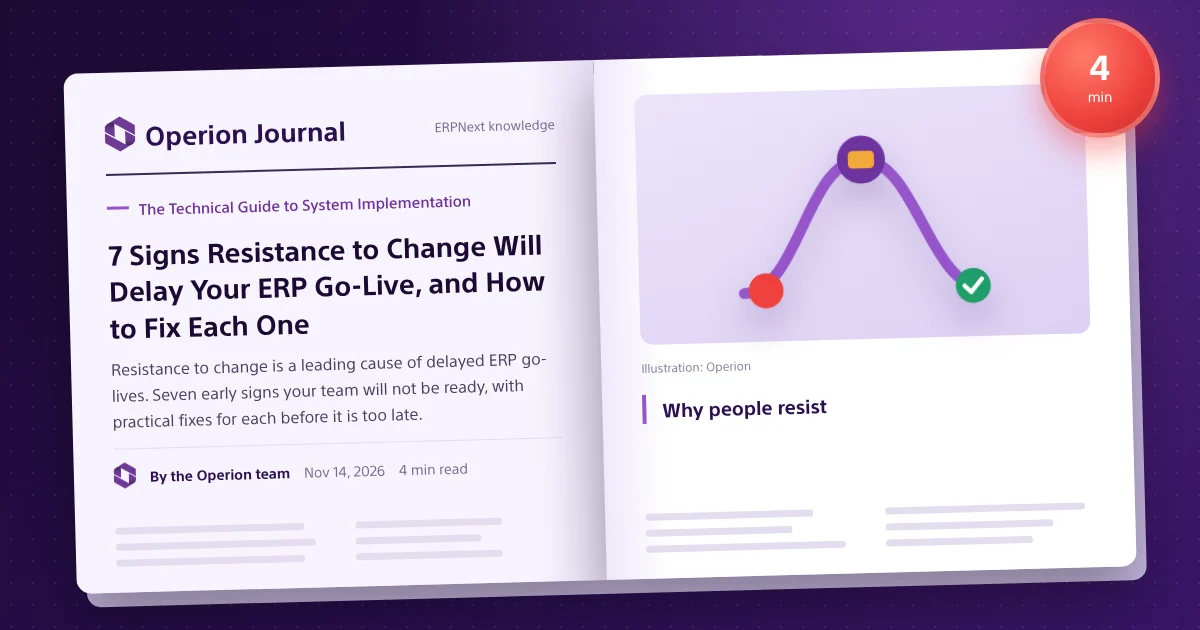
Why people resist
Fear of losing mastery, fear that transparency exposes old mistakes, worry about job cuts, fatigue from running two systems, and bad past experiences. Understanding the cause is half the cure.
The seven signs and their fixes
1. Key users skip analysis workshops. Fix: name a key user per department and make their sign-off a gate.
2. "In the old system we used to…" in every meeting. Fix: ask for the goal, not the old method; see turning complaints into requirements.
3. Nobody uses the test system. Fix: task-based training on real scenarios with weekly completion tracking.
4. Data clean-up keeps slipping. Fix: small weekly batches, an owner per data type, visible progress; see migrating to ERPNext.
5. Requests for long parallel running. Fix: agree acceptance criteria, then close the old system for entry.
6. Leadership talks about the system but does not use it. Fix: management meetings use system dashboards from week one.
7. Nobody knows "what is in it for me". Fix: three concrete daily benefits per role, used to open training.
| Sign | Meaning | Fix |
|---|---|---|
| Key users absent | No ownership | Named key users, mandatory sign-off |
| "In the old system…" | Copying the past | Ask for the goal |
| Test system unused | Training starts at go-live | Task-based training |
| Clean-up slipping | Low trust or priority | Small batches, owners |
| Long parallel run | Fear of commitment | Acceptance criteria, close old system |
| Leaders not using it | System is optional | Lead by example |
| "What's in it for me?" | System is a burden | Benefits per role |
The implementer's role
A good implementer plans role-based training, tracks readiness, flags these signs early and simplifies processes. Operion's methodology includes a readiness phase before any go-live.
Readiness checklist two weeks before go-live
- Key users completed their scenarios.
- Opening balances reconciled and approved.
- Permissions tested per role.
- Named hypercare plan for the first two weeks.
- Go-live and old-system closure dates approved.
- Clear channels for questions.
Planning or rescuing an ERP project? Talk to Operion.
Frequently asked questions
Why do ERP projects fail or slip?
Often for human reasons: weak user involvement, late data clean-up, no leadership example and theoretical training.
Is parallel running a good idea?
Briefly with clear acceptance criteria, yes; long parallel runs increase resistance.
What is a key user?
A departmental representative who joins analysis and testing, trains colleagues and supports them after go-live.
How do I measure readiness?
Scenario completion, reconciled balances, tested permissions and a support plan.