

- Home
- ERPNext for Saudi companies
ERPNext for companies in Saudi Arabia
Accounting, inventory, sales, HR and manufacturing on one platform, with e-invoicing compliant with ZATCA in both phases: generation and integration with the Fatoora platform. From Riyadh to Jeddah and Dammam, every branch on one system.
- E-invoicing phases 1 and 2
- Fully Arabic interface
- No per-user license fees
Details
Items
Totals
Fatoora · ZATCASendingCleared
- Generate XML invoice (UBL 2.1)
- Cryptographic stamp and invoice hash
- Submit for clearance
Permanently submit this document? It can no longer be edited after submission.
From scattered systems to one compliant platform
Saudi companies that move to ERPNext drop daily burdens that eat up finance and operations time.
- Separate systems for accounting, stock and sales with duplicated data
- Constant worry about Fatoora integration and wave deadlines
- Tax returns compiled by hand from many sources
- No single view of branch performance across cities
- One operating cycle with no duplicated data
- Invoices are cleared or reported automatically on submit
- VAT and its reports ready from the same system
- Live dashboards for every branch and city
One platform to run your business in Saudi Arabia
ERPNext brings financial and operational processes into one system that helps Saudi companies control accounts, invoices, inventory, sales, HR and reporting through a modern, scalable experience.
E-invoicing ready
ERPNext can be configured for ZATCA and Saudi e-invoicing requirements, supporting Phase 1 and Phase 2 according to project scope and the required integration.
Integrated financial management
Chart of accounts, journal entries, invoices, payments, financial reports, cost centers and VAT in one connected system.
Unified operations
Sales, purchasing, stock, manufacturing, HR and projects in one workflow with no duplicated data.
Fit for Saudi Arabia’s digital vision
As the Kingdom drives digital transformation, ERPNext moves companies to a unified platform with Arabic, e-invoicing, tax, reporting and modern integrations.
ERPNext and integration with ZATCA
A key requirement for companies in Saudi Arabia is an ERP that supports e-invoicing, VAT and invoice issuance in line with ZATCA. Operion configures ERPNext to issue e-invoices and QR codes and to integrate with the Fatoora platform, according to each company’s requirements and phase.
Saudi e-invoicing
ERPNext ↔ Fatoora platform · ZATCA
- Invoice in ERPNext
- UBL 2.1 XML
- Cryptographic stamp and hash
- Clearance or reporting via Fatoora
- QR code on the invoice
Phase 1 · Generation
Started 4 December 2021Generate and store tax invoices and notes electronically from a compliant system, with a QR code on simplified invoices and no edits or deletion after issue.
Phase 2 · Integration
Rolled out in waves since 1 January 2023Integration with Fatoora: tax invoices are sent for clearance before being shared with the buyer, and simplified invoices are reported within 24 hours.
VAT and compliance
VAT at 15%VAT, invoices, credit and debit notes organized so the finance team stays fully compliant.
Tax invoice (B2B)
ClearanceSent to Fatoora the moment it is submitted, and returned stamped by ZATCA before it goes to the customer.
Simplified invoice (B2C)
ReportingHanded to the customer at the point of sale with a QR code, and reported to the platform within 24 hours.
What does the QR code on your invoice carry?
- 01Seller name
- 02Seller VAT number
- 03Invoice date and time
- 04Invoice total including VAT
- 05Total VAT
- 06Invoice hash (Phase 2)
- 07Digital signature and public key (Phase 2)
Compliant QR code
QR codes for e-invoices with the fields required in each phase.
UBL 2.1 XML
Invoices generated in ZATCA’s approved technical format with a UUID.
Cryptographic stamp
Invoices stamped and hashed, each chained to the previous one with the invoice counter (ICV).
Onboarding and CSIDs
E-invoicing units registered and integration certificates (CSIDs) issued with Fatoora.
Credit and debit notes
Credit and debit notes linked to the original invoice and compliant with the requirements.
Responses and resubmission
Each invoice’s status and the platform response appear in ERPNext, with resubmission after fixes.
Simplified invoices straight from the cashier
The cashier sells as usual, and ERPNext prints the simplified invoice with a QR code and reports it to Fatoora in the background.
A full log of every invoice
Cleared, reported and rejected invoices in one screen, with the platform response and one-click resubmission.
The buyer VAT number is incomplete (15 digits), so the customer record was corrected.
What your company needs to integrate with Fatoora, and we prepare it with you
- 1Fatoora portal accountConfirm your company’s wave and activate it on the Fatoora platform.
- 2Integration certificate (CSID)Register the e-invoicing unit and obtain the compliance and then production CSIDs.
- 3Company and customer dataComplete VAT numbers and national addresses for your company and business customers.
- 4Tax settingsConfigure 15% VAT and exempt and zero-rated items.
ERPNext fits every industry in Saudi Arabia
ERPNext is not built for one activity only. Its customizable, scalable modules fit the nature of every company in the Saudi market.
Retail and POS
Branches, stock, cashiers, customers and invoices in one system for retail showrooms and stores in Saudi Arabia.
Trading and distribution
Sales, purchasing, suppliers, customers, delivery and warehouses in one fully connected cycle.
Manufacturing
For Saudi factories that track raw materials, production, costs and operating plans on one platform.
Contracting and projects
Projects, tasks, costs, invoices, purchasing and execution tracking in one integrated ERP.
Services
For service and consulting firms managing contracts, recurring invoices, operating teams and clients.
Healthcare
Administration, finance, stock, purchasing and HR for clinics and healthcare facilities.
All your operations on one ERP platform
Modern screens with the Operion Theme help companies in Saudi Arabia run accounting, sales, stock, manufacturing and projects. Start with the core modules and expand as you grow.
Accounting and finance
Journal entries, accounts, banks, taxes, invoices and financial reports that fit Saudi company requirements.
Sales and customers
Quotations, sales orders, invoices, customers, collections and sales team reports.
Inventory and warehouses
Full control of stock, warehouses, counts, transfers and item and batch tracking.
Purchasing and suppliers
The full purchasing cycle from material requests to invoices, linked to stock and accounts.
HR and payroll
Employees, attendance, leave, payroll and the org structure on one ERP platform.
Manufacturing
Work orders, production plans, raw materials and costs for Saudi factories.
CRM
Track leads, opportunities and sales team decisions inside the same system.
Projects and tasks
Manage projects, team tasks and execution costs on the same platform.
Ready to see ERPNext and ZATCA integration on your data?
Book a free demo and we will show you the sales, stock and e-invoicing cycle as it will run in your company. Our team replies within one business day.
How we implement ERPNext in Saudi Arabia
A successful ERPNext rollout starts by understanding your business, then setting up the system and integrating with Saudi market requirements, for stable, scalable operations.
- 01
Business analysis
Understand current processes, workflows, needs and operational issues.
- 02
System setup
Configure ERPNext with accounts, warehouses, users, permissions and reports for your business.
- 03
E-invoicing readiness
Configure ZATCA requirements and Fatoora integration according to your company’s phase.
- 04
Data migration
Import customers, items, accounts, suppliers and balances from previous systems.
- 05
Training and go-live
Train your staff and rehearse daily operations before the actual launch.
- 06
Support and growth
Monitor performance after go-live with support and future development.
Why choose Operion to implement ERPNext in Saudi Arabia?
We deliver a complete operating experience that helps Saudi companies run accounting, stock, sales, HR and e-invoicing efficiently and at scale.
Experience in the Saudi market
We implement ERPNext practically, focused on real operations, with e-invoicing readiness, branches, stock, accounts and reports.
- ZATCA readinessBoth phases configured to each project’s scope.
- Flexible customizationsThe system developed to fit each activity.
- Training and go-liveStaff training and hands-on go-live follow-up.
- Ongoing supportContinuous follow-up and improvements for a stable system.
Professional implementation
A connected operating cycle in ERPNext across accounting, sales, stock, purchasing, HR and reports.
E-invoicing ready
ZATCA requirements, QR codes and Fatoora integration delivered in a stable, professional way.
Built to scale
Start with selected modules and grow by adding branches, departments, apps and integrations.
ERPNext vs traditional systems
Many companies in Saudi Arabia look for an ERP that combines flexibility, fair cost, easy customization and growth, with e-invoicing readiness.
Lower running cost
ERPNext gives Saudi companies a professional ERP at a lower cost than license-heavy legacy systems.
Flexible and customizable
ERPNext adapts to the way your company works without complex workarounds.
Built for growth
Start with core modules and expand as you add departments and branches.
| Comparison | ERPNext | Traditional systems |
|---|---|---|
| License costCost to start and scale | Flexible and fair | Usually high |
| CustomizationAdapting the system to the business | Highly flexible | Limited or costly |
| E-invoicing supportZATCA compliance | Integration-ready | Depends on version |
| ScalabilityGrowing with the company | Excellent | Increasingly costly |
| Branches and stockMultiple branches and warehouses | Fully built in | Needs add-ons |
| Open sourceFull control of the system | Open Source | Closed Source |
ERPNext vs leading ERP systems
Companies in Saudi Arabia compare ERPNext, Odoo, SAP Business One and Oracle NetSuite to find the best balance of cost, flexibility, customization and growth.
| Criteria | ERPNext | Odoo | SAP Business One | Oracle NetSuite |
|---|---|---|---|---|
| License costCost to start and scale | Low and flexible | Medium | High | Very high |
| CustomizationAdapting to the business | Very high | Good | Limited | Complex |
| Open sourceFull control of the system | Open Source | Partly | Closed | Closed |
| E-invoicing supportZATCA integration | Flexible, integration-ready | Needs add-ons | Available | Available |
| Ease of implementationSpeed to go live | Faster and more flexible | Good | Complex | Very complex |
| Fit for mid-size companiesBest balance of capability and cost | Excellent | Very good | Relatively costly | High cost |
| ScalabilitySupporting growth and branches | Excellent | Very good | Strong | Very strong |
Our participation in Frappe Local 2024 in Riyadh
Operion’s presence at Frappe Local in Riyadh reflects our experience implementing ERPNext in the Saudi market and our ongoing follow-up of the latest Frappe, ERP and digital transformation developments in the Kingdom.
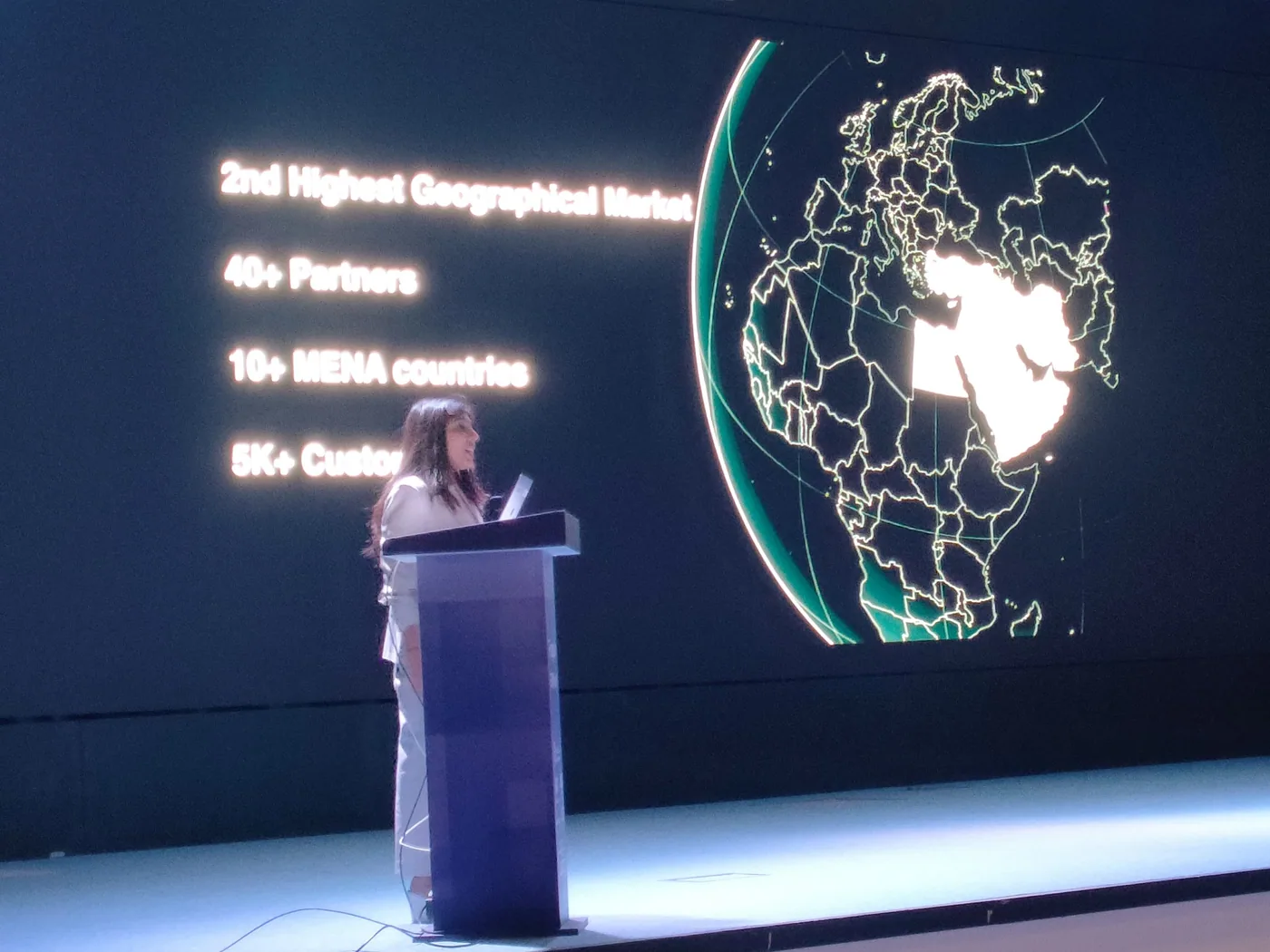
A real presence in the Saudi ERPNext community
The Operion team took part in Frappe Local in Riyadh to discuss the future of ERPNext and digital transformation in Saudi Arabia, and to build relationships with companies, specialists and entrepreneurs looking for flexible, modern ERP.
- Face-to-face meetings with the Frappe community in Saudi Arabia
- Discussions on ERPNext and digital transformation
- The latest Frappe and ERPNext developments
- New partnerships and opportunities in the Saudi market
Frequently asked questions
Didn’t find your answer? Our team replies within one business day.
Does ERPNext support e-invoicing in Saudi Arabia?
Yes. ERPNext can be configured for ZATCA e-invoicing requirements, including QR codes and the integrations each project needs.
Does the system support Phase 2 (integration)?
Yes. Operion configures ERPNext to integrate with Fatoora: tax invoices are cleared before being sent to the customer, simplified invoices are reported within 24 hours, with cryptographic stamps and QR codes.
What is the difference between clearance and reporting?
Clearance applies to B2B tax invoices, which are sent to the platform before being shared with the buyer. Reporting applies to B2C simplified invoices, which are handed to the customer immediately and reported within 24 hours.
Is ERPNext suitable for small and medium businesses?
Yes. ERPNext suits small, medium and large companies thanks to its flexibility and the option to start with selected modules and expand later.
Can ERPNext handle multiple branches and warehouses?
Absolutely. ERPNext supports multiple branches, warehouses and permissions with unified reports and central management of all operations.
Can ERPNext be customized to our business?
Yes. ERPNext is highly flexible, allowing you to customize forms, reports, permissions and workflows to fit your activity.
How long does an ERPNext implementation take?
It depends on company size, departments and customizations, but it is usually delivered in phases for a smooth transition and stable operations.
Ready to switch to ERPNext?
See how ERPNext can make your business more efficient and cut costs, with Operion beside you from analysis to go-live and support.