 Operion Journal
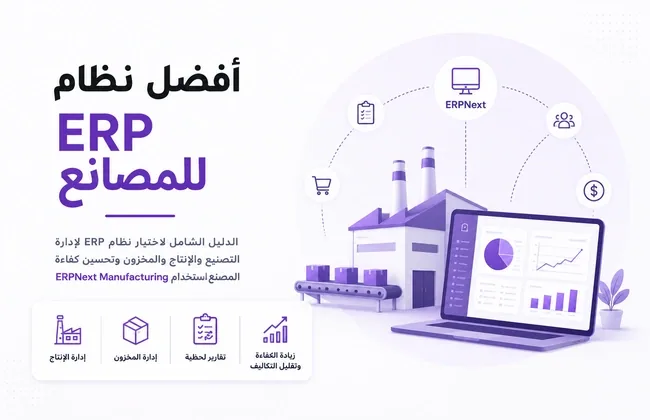
A factory's success no longer depends only on modern production lines or advanced equipment. It depends on having a factory ERP system that connects every operational process on one platform, from raw materials management through manufacturing, inventory, and quality, all the way to accounting, sales, and maintenance.
The manufacturing sector has changed dramatically in recent years, driven by digital transformation, tougher competition, and rising customer expectations. Specialized ERP systems have become a strategic necessity for every factory that wants to improve productivity, cut costs, and raise product quality.
As production lines grow and branches and warehouses multiply, managing operations with Excel files or disconnected programs becomes complicated, slows decision-making, and blurs your view of operational performance. That is why modern industrial companies rely on manufacturing ERP systems like ERPNext Manufacturing to manage the entire manufacturing cycle from a single database with real-time dashboards.
In this complete guide you will learn how to choose the best ERP system for factories, the main challenges factories face, and how ERPNext helps manage manufacturing, inventory, quality, costs, and maintenance on an integrated platform that supports your factory's future growth.
A Unified Operations Platform
Manage accounting, manufacturing, inventory, sales, purchasing, quality, and maintenance in one system.
Production Planning
Plan raw material requirements, manage work orders, and follow production execution moment by moment.
Full Operational Visibility
Real-time reports and dashboards help management make accurate decisions based on real data.
Why Has ERP Become a Must for Every Factory?
Modern factories depend on real-time data and on connecting all operations in a single database, which reduces errors, improves planning, increases production efficiency, and strengthens competitiveness in the market.
What Will You Learn in This Guide?
You will learn about the operational challenges factories face, how to choose the best ERP system, the role of ERPNext Manufacturing in managing the entire manufacturing cycle, and a comparison of the best-known systems used in manufacturing, plus the key criteria to help you make the right decision.
Best ERP for factories, ERP manufacturing, ERPNext Manufacturing, manufacturing ERP, manufacturing management, inventory management, MRP, quality management, production planning, factory ERP
Why Have Factory ERP Systems Become a Necessity?
Modern factories face growing challenges in managing production, inventory, supply chains, costs, and quality. With competition rising, relying on traditional files or disconnected systems is no longer enough to run daily operations efficiently, so adopting a factory ERP system has become one of the most important factors for success and sustainability.
Traditional Management No Longer Fits Modern Factories
Every process inside a factory affects the next one. When purchasing is late, production suffers. When work orders are late, sales suffer. When inventory data is inaccurate, management decisions get worse. That is why factories need a unified platform that connects every department in a single database and gives real-time visibility into all operations.
An ERP system helps eliminate duplicate data and reduce manual errors, and it connects production with sales, purchasing, inventory, accounts, quality, and maintenance, which raises operating efficiency and improves decision-making.
24/7 real-time monitoring of all operations
Production Management
Track work orders, workstations, manufacturing stages, and raw material consumption in real time in one system.
Inventory Management
Know available quantities and minimum levels, manage warehouses, and track item and batch movements accurately.
Smart Planning
Plan raw material requirements and production capacity to avoid delays, reduce waste, and make better use of resources.
Quality Management
Apply quality inspection procedures at every stage of manufacturing to make sure products meet specifications and to reduce rejection and rework rates.
Cost Management
Calculate actual product cost by linking raw materials, labor, and manufacturing overhead for an accurate view of profit margins.
Real-Time Reports
Live dashboards and reports help management monitor production, sales, inventory, and costs and make decisions based on up-to-date data.
How Does ERP Change the Way You Run a Factory?
Instead of relying on separate programs or Excel files, an ERP system connects all operational processes on one platform. When a sales order is created, the production plan updates, raw material requirements are calculated, purchase orders are issued when needed, and inventory updates automatically. Production costs are then recorded and linked to the accounts, and financial and management reports are produced in real time.
Every Minute Lost in the Factory Has a Cost
Production delays, raw material shortages, stock count errors, and weak quality monitoring all hit profitability and customer satisfaction directly. That is why modern factories rely on manufacturing ERP systems like ERPNext Manufacturing to build a connected operating environment that improves performance, reduces waste, and drives sustainable growth.
Manufacturing ERP, ERP for factories, ERPNext Manufacturing, production planning, inventory management, MRP, quality control, factory ERP
The Main Challenges Factories Face Before Implementing ERP
Running a factory gets more complex as production grows and the number of products, customers, and suppliers increases. Relying on manual procedures or disconnected systems becomes a leading cause of lower operational efficiency, higher production costs, and harder decisions.
No Full Visibility Inside the Factory
When each department works with different files or separate programs, it is hard to know the true state of the factory at any moment. Data is scattered across production, inventory, sales, and accounting, which slows decisions and raises operational errors.
It is hard to know real quantities, reorder points, and the raw materials available for production.
Without an accurate production plan, you get delays or inefficient use of resources.
Weak quality control leads to more defective products and higher rework costs.
Higher Production Costs
Not knowing the actual cost of each product leads to poor pricing and lower profitability.
Wasted Time and Resources
Manual data entry and duplicated work between departments consume long hours and raise the chance of operational errors.
Weak Integration Between Departments
No integration between production, sales, purchasing, and accounts leads to conflicting data and makes it hard to follow workflows.
Every Small Problem Becomes a Big Cost
Everyday issues such as a delayed work order, a stock quantity mismatch, or a late raw material delivery may look minor, but over time they directly affect productivity, product quality, customer satisfaction, cash flow, and the profitability of the entire factory.
Production: delayed work orders
Inventory: surplus or shortage in quantities
Quality: a higher share of defective products
Finance: higher operating costs
Is the Problem in the Factory, or in How You Manage Data?
Often the problem is not the production lines or the employees, but the lack of a unified system that connects every process inside the factory. Manufacturing ERP unifies data, connects departments, automates procedures, and provides real-time visibility so management can make faster, more accurate decisions based on real information.
Manufacturing ERP, ERP for factories, ERPNext Manufacturing, production management, inventory control, quality management, manufacturing planning, factory automation
Traditional Management vs ERP
The manufacturing sector has changed dramatically in recent years, driven by digital transformation, tougher competition, and rising customer expectations
Why Are Traditional Methods No Longer Right for Managing Factories?
As a factory grows and daily operations get more complex, Excel files and disconnected programs become a burden on management instead of a help. An ERP system provides a unified view that lets you manage all operations from one connected platform.
Traditional Management
Excel + separate programs
Duplicate Data Entry
Re-entering the same data in more than one program raises error rates and wastes employee time.
Delayed Reports
Compiling data by hand delays reports and makes timely decisions harder.
Disconnected Data
Each department works in isolation, which causes mismatched numbers and makes it hard to know the operational truth.
ERP Manufacturing
A unified platform to manage the entire factory
Enter Data Once
Data is entered only once and flows automatically between production, inventory, sales, and accounting with no duplication.
Real-Time Reports
Instant dashboards show performance, production, sales, and cost indicators in real time.
Full Integration Between Departments
Link sales, purchasing, production, inventory, accounts, quality, and maintenance in a single database.
The Real Difference Between Excel and ERP Is Not the Software, but How You Run the Factory
When an organization relies on Excel files or separate systems, data is scattered across departments and it is hard to get an accurate view in time. With a manufacturing ERP like ERPNext Manufacturing, all data moves automatically between departments, which helps reduce errors, improve planning, speed up decisions, and raise operating efficiency at every stage of manufacturing.
Excel: manual management that depends on people
ERP: connected management that depends on data
Real-Time: live data and reports
Automation: automated processes and fewer errors
Are You Still Running Your Factory on Excel?
If the answer is yes, it is time to move to a modern ERP system that connects all operational processes on one platform and improves planning, production, inventory, quality, and accounting, with real-time visibility that helps management make more accurate decisions.
ERP Manufacturing, ERP for factories, ERPNext Manufacturing, production planning, inventory management, manufacturing automation, factory ERP, digital transformation
How Does ERP Change the Way You Run a Factory?
One of the main reasons factory ERP systems succeed is their ability to connect all operational processes in a single workflow that starts with the customer order and ends with the invoice, with data moving automatically between all departments and no need to re-enter or transfer it by hand.
The Data Journey Inside the Factory Is Now a Single Journey
In traditional systems each department works in isolation, while in ERPNext Manufacturing data moves automatically between all departments. When a Sales Order is created, the production plan updates, raw material requirements are calculated, purchase orders are issued when needed, work orders are created, and inventory, costs, and accounts update in real time.
Sales Order
The journey starts by receiving the customer's order and defining the products, quantities, and delivery dates required.
Production Planning
The system analyzes sales orders and prepares the right production plan based on available production capacity.
Material Planning (MRP)
Calculate raw material requirements and confirm availability before manufacturing starts.
Purchase
If raw materials are short, the system creates purchase requests and links them to the production plan.
Work Order
Once raw materials are confirmed, the system creates work orders and sets the workstations and operations needed for each product.
Manufacturing
Production runs while raw material consumption, time, and costs are recorded directly in the system.
Quality Control
Quality tests run during and after manufacturing to confirm products meet standard specifications before delivery.
Inventory Update
Inventory balances update automatically, adding finished goods and deducting the raw materials used in manufacturing.
Delivery
Issue delivery orders and link shipping to inventory, tracking order status until it reaches the customer.
Accounting & Reporting
The system records accounting entries, updates product cost, and produces reports and dashboards in real time with no manual intervention.
All Departments Work as One System
The strength of ERPNext Manufacturing is that every step in the manufacturing cycle automatically affects the next, which keeps data integrated across production, sales, purchasing, inventory, accounts, and quality with no need to enter data more than once. This helps reduce errors, speed up execution, and raise the efficiency of the whole factory.
01 Full Connection Between All Departments
From the Customer Order to the Final Invoice
Instead of handling each stage separately, a manufacturing ERP system manages the whole manufacturing cycle on one platform, giving management a complete view of all operations and helping it make decisions based on accurate, real-time data.
ERP Manufacturing, ERPNext Manufacturing, production planning, MRP, manufacturing workflow, inventory management, quality control, factory ERP
Industries That Benefit from Manufacturing ERP
ERP systems are not limited to one type of factory. They can be applied across industrial sectors, with the workflow customized to each industry, from raw materials to the finished product.
Food Manufacturing
Manage raw materials, recipes, expiry dates, operations, quality, and production batches on one platform.
Pharmaceutical Manufacturing
Manage quality, batches, raw materials, and product tracking.
Plastics Manufacturing
Manage production lines, material consumption, and quality control.
Metal Manufacturing
Manage operations, costs, raw materials, and workstations.
Furniture and Wood
Manage BOMs, made-to-order production, and inventory control.
Packaging
Manage packaging lines, packaging materials, work orders, and quality to ensure fast delivery and less waste.
Chemical Manufacturing
Manage chemical formulations, raw materials, quality, and precise batch tracking.
Textiles and Apparel
Manage colors, sizes, materials, production lines, and inventory with high efficiency.
Electronics
Track electronic components and manage assembly, quality, and multi-stage work orders.
Building Materials
Manage mass production, raw materials, work orders, and inventory across different warehouses.
And Other Industrial Sectors...
ERPNext Manufacturing can be customized to fit nearly any factory, whether it runs continuous production, made-to-order production, assembly, or multi-stage manufacturing. The system's flexibility lets you build a workflow that fits each industry without changing the way your factory works.
Manufacturing ERP, ERPNext Manufacturing, MRP, production, quality, inventory
One ERP System... Fits Dozens of Industries
Whether you run a food, pharmaceutical, plastics, metal, furniture, electronics, or building materials factory, ERPNext Manufacturing gives you the tools to manage the entire manufacturing cycle, with processes, templates, and reports customized to each industrial activity.
12+ industrial sectors you can serve
ERPNext is a complete manufacturing platform
ERP for factories, Manufacturing ERP, ERPNext Manufacturing, production management, factory ERP, quality control, MRP, production planning, inventory management, digital manufacturing
Key Manufacturing Features
What Should the Best Factory ERP Offer?
Choosing a factory ERP system does not come down to having accounting or inventory modules. The system needs a complete set of tools for managing the whole manufacturing cycle, from production planning to costing and real-time reporting.
Manage the Entire Manufacturing Cycle on One Platform
An ERP system should connect every stage of manufacturing in a single database, so the workflow starts from sales orders, then production planning, raw material requirements, work orders, quality, inventory, and on to accounting, with no need to re-enter data.
Bill of Materials (BOM)
Manage the components of the finished product and raw material quantities, linked directly to work orders.
Build production plans based on actual demand, production capacity, and available resources.
Material Requirements Planning (MRP)
Calculate raw material requirements automatically and link them to inventory and purchase orders before production starts.
Work Orders
Manage work orders and link them to workstations, labor, raw materials, and execution steps.
Run quality tests at every stage of manufacturing and link inspection results to products and batches to ensure specifications are met and defective products are reduced.
Maintenance Management
Manage preventive and periodic maintenance for equipment and production lines to reduce breakdowns, improve operating efficiency, and extend asset life.
Manufacturing Costing
Calculate the actual cost of products from raw materials, labor, and manufacturing overhead for an accurate view of profitability.
Dashboards & Reports
Real-time dashboards and reports show performance, production, sales, inventory, and cost indicators to support management decisions.
Barcode & Warehouse
Manage warehouses with barcodes, track item movement between locations, and speed up receiving, issuing, and stock counts.
Batch & Serial Tracking
Track batches and serial numbers from raw material receipt through delivery of the finished product to customers.
The Best Factory ERP Is About More Than Managing Production
A professional system should connect all factory operations on one platform, from BOM, MRP, and Work Orders management, through quality, maintenance, and inventory, to costing and real-time reports and dashboards. This integrated setup is what gives management the accurate visibility to raise productivity, cut waste, and improve profitability.
Manufacturing ERP, ERP for factories, ERPNext Manufacturing, Bill of Materials, production planning, MRP, Work Orders, manufacturing costing, quality control, maintenance management, factory ERP, production management
Why ERPNext Manufacturing?
Why Choose ERPNext to Run Your Factory?
Most ERP systems cover the basic functions of running a business, but factories need more than an accounting or inventory system. They need a flexible platform that connects production, purchasing, sales, quality, inventory, and accounts in a single operating cycle. That is where ERPNext Manufacturing comes in, as one of the most flexible and dependable solutions for industrial organizations looking for efficiency and scalability.
The Difference Isn't the Number of Features. It's How You Run the Factory
Many ERP systems look alike when you scan a feature list, but the real difference shows when you run the factory day to day. Every minute of production delay, every inventory error, and every lapse in quality monitoring feeds straight into operating cost and profitability. That is why ERPNext relies on a unified database and full integration across all departments, so data flows in real time with no duplication.
Limited customization at a high cost
Full customization to fit your factory's needs
Requires add-ons or external integrations
Full integration on one platform
Advanced MRP and integrated production management
Capabilities vary by system
Complete management of work orders and workstations
Dashboards
Static reports and often manual updates
Real-time dashboards and live performance indicators
Limited integration, or needs extra licenses
A complete REST API to connect the system to any platform
Limited options depending on the system vendor
Cloud or on-premise, as you need
Requires extra setup or licenses
Full support for managing multiple companies and branches
You may need to change systems as the factory grows
Scales with your business with no need to replace it
High license and maintenance fees over the long term
Lower cost of ownership with greater flexibility
Why Do Industrial Companies Choose ERPNext?
Choosing an ERP system isn't about comparing a list of features. It's about choosing a platform that can grow with your business and support the factory's current and future operations. ERPNext Manufacturing combines flexibility, a low cost of ownership, customization options, and full integration across departments, making it a good fit for factories pursuing digital transformation and better operating efficiency.
Open Source: complete freedom to customize and develop, without the limits of closed licenses.
Flexible: design workflows, templates, and reports to fit the nature of your factory.
Scalable: grows as your business expands and you add production lines, companies, or branches.
Integrated: connect production, inventory, sales, accounting, and quality on one platform.
ERPNext Is Not Just Software. It's a Complete Platform for Running the Factory
When you look for the best manufacturing ERP, you are not just looking for software to issue invoices or track inventory. You are looking for a platform that helps you improve production, cut waste, raise product quality, and get a complete operational and financial view. That is why ERPNext Manufacturing has become a preferred choice for many factories around the world.
ERPNext Manufacturing, Manufacturing ERP, best ERP for manufacturing, open source ERP, factory ERP, production planning, MRP, digital transformation
What Return Can You Expect from Implementing ERPNext in Your Factory?
The success of an ERP project isn't just about running a new system. It is measured by the results it delivers for the factory on the ground. When all data is connected on one platform, performance indicators start improving clearly, decisions get faster and more accurate, and errors, waste, and operating costs fall gradually.
Digital Transformation Shows Up Directly in Factory Performance
ERPNext Manufacturing helps management track operational, financial, and production performance through live indicators and accurate reports, so you can spot problems early, make better use of resources, and raise production line efficiency.
Less Raw Material Waste
Material requirements planning (MRP) and batch tracking help reduce waste and improve raw material consumption.
A Faster Production Cycle
Linking sales orders, production, and inventory shortens order fulfillment time and speeds up delivery.
Better Inventory Management
Real-time inventory updates prevent stockouts and overstocking and make planning more accurate.
Real-Time Reports for Management
Instant dashboards give management an accurate view to make decisions at the right time.
Better Product Quality
Applying Quality Control procedures and linking them to production lines helps reduce defective products, improve customer satisfaction, and lower rework costs.
Accurate Production Costing
The system collects the cost of raw materials, labor, and manufacturing overhead automatically, giving management an accurate view of the profit margin on each product.
Integration Across Departments
ERPNext connects sales, purchasing, production, inventory, and accounts in a single database, which reduces duplicate data and improves work efficiency.
Better Financial Performance
When waste falls, planning improves, and productivity rises, management decisions get more accurate, which shows up in profit growth and a more sustainable business.
Digital Transformation Isn't the Goal. It's a Way to Reach Measurable Results
When ERPNext Manufacturing is implemented properly, the benefit goes beyond automating processes to improving operational and financial KPIs. Management can track production, inventory, costs, and quality through real-time data, while manual errors fall and resources are used better, which directly improves the factory's profitability and competitiveness.
Production: raise production efficiency and operational planning.
Inventory: improve inventory accuracy and cut waste.
Finance: provide an accurate financial view and clear production costs.
Management: make faster decisions based on real-time data.
Real Success Is Measured by the Impact the System Has on Your Business
If you are looking for a system that helps your factory achieve sustainable growth, improve operating efficiency, reduce waste, and raise product quality, ERPNext Manufacturing is a complete platform that helps you reach these goals by connecting all operational and financial processes in one system, with live performance indicators that support timely decisions.
Manufacturing ERP, ERPNext Manufacturing, factory management, production KPIs, inventory accuracy, quality control, business intelligence, digital manufacturing, manufacturing ROI, Industry 4.0
ERP Implementation Journey
The ERP Manufacturing Project Journey, Step by Step
The success of an ERP project depends not only on the quality of the system, but even more on the implementation methodology. Even the best ERP systems can fail if they aren't implemented to a clear plan that accounts for the factory's needs, while a professional implementation methodology can deliver a real digital transformation that reaches every operational and financial process.
Every Phase Sets Up the Success of the Next
At Operion we follow a clear implementation methodology that starts with understanding the factory's business and analyzing current processes, then designing the right solution, configuring the system, migrating data, and training users, through to go-live and ongoing support. This methodology helps reduce risk and deliver value from the project faster.
Discovery & Assessment
Assess the Current State
We start by understanding the factory, its work structure, production lines, current challenges, and the goals the ERP project must achieve.
Business Analysis
Process Analysis
We analyze the current workflow, identify gaps and opportunities, and document the functional and operational requirements of each department in the factory.
Solution Design
Design the Solution
We prepare a complete blueprint for how ERPNext will be applied in the factory, covering workflows, permissions, templates, reports, and any required customizations.
ERPNext Configuration
System Setup
We configure the system and connect modules such as Manufacturing, Buying, Stock, Accounting, and Quality, to match the factory's actual workflow.
Data Migration
Data Migration
Customer, supplier, raw material, product, inventory, and opening balance data is moved into ERPNext, then reviewed and validated to ensure the project starts on the right footing.
User Training
User Training
We train production, purchasing, stock, accounting, and management teams on the system using real work scenarios, to speed up adoption and reduce resistance to change.
Pilot Run
Pilot Run
We run the system on a limited scope to confirm processes work and data is sound, and to address any feedback before moving to live operation.
Go Live
Go Live
The full switch to working in ERPNext, with direct follow-up from the implementation team to keep operations stable and resolve any challenges that appear in the first days.
Continuous Improvement
Continuous Development and Improvement
After a successful go-live, we move on to developing reports, dashboards, and automation, and adding the improvements that help the factory get the most from the system as the business grows.
Key Success Factors for an ERP Project in a Factory
Project success depends on more than installing the system. A set of factors ensures you achieve the results you want and speeds up digital transformation inside the factory.
Senior Management Support
A clear vision and management commitment help the project succeed and speed up decisions.
Rigorous Business Analysis
Understanding current processes and defining real needs before implementation begins reduces risk during the project.
Clean Data
Migrating correct data and reviewing it before go-live ensures accurate reports from day one.
The more skilled your users are with the system, the more of its capabilities you will use.
Change Management
Involving every department in the project helps reduce resistance to change and drives faster adoption.
Continuous Improvement
ERP success doesn't end at Go Live. It begins after it, through continuous development and KPI analysis.
Implementation Success Starts with a Clear Methodology, Not Just Installing the System
At Operion we follow a practical implementation methodology that covers every phase of the project, from studying the factory's needs through go-live and ongoing support. You can see the details of every implementation phase on the ERPNext implementation methodology page.
Why Do Companies Rely on Operion to Implement ERPNext Manufacturing?
Choosing an ERP system is an important step, but project success depends even more on the experience of the implementation team and its way of working. That is why at Operion we don't just provide an ERPNext system. We offer a complete journey that starts with analyzing the factory's needs, moves through implementation and training, and continues with ongoing support and development to deliver the best results.
The Certified Operion Team
Meet our certified team and their experience implementing ERPNext projects for factories and companies across industries.
The ERPNext Project Implementation Journey
Learn about every phase of a project, from business analysis through go-live and ongoing support.
Customer Success Stories
See how Operion has helped many organizations improve their operations with ERPNext and achieve tangible results.
Explore the ERPNext Manufacturing Module
Explore everything the ERPNext Manufacturing module can do, including work order management, material requirements planning (MRP), workstations, bills of materials (BOM), quality management, maintenance, and manufacturing costing on a unified platform.
ERPNext Solutions for Different Industrial Sectors
See how ERPNext adapts to different industries such as food, pharmaceutical, engineering, chemical, plastics, furniture, textiles, and more.
Implementation Methodology
ERPNext Implementation Methodology
See the methodology Operion uses to implement ERPNext projects, from business analysis and solution design through data migration and training, to go-live and continuous improvement.
Everything You Need for a Successful ERPNext Manufacturing Project, in One Place
If you are planning to implement ERPNext Manufacturing or want to upgrade your current system, we have gathered the key resources to help you make the right decision. Learn about the Manufacturing module, explore solutions for different industrial sectors, review the implementation methodology, follow the customer journey and success stories, and meet the certified Operion team that leads digital transformation projects.
Is Your Factory Ready for Digital Transformation with ERPNext Manufacturing?
Before you decide to invest in a new ERP system, it helps to assess where your factory stands today. The questions below help you gauge the maturity of your operations and find the areas ERPNext Manufacturing can improve.
Assess Your Factory in Under a Minute
Answer the following questions based on how your factory actually works. There are no right or wrong answers. The goal is to identify opportunities for improvement and how much you need an integrated ERP platform that supports production, inventory, quality, and accounting in one place.
Do you rely on Excel or separate files for production planning?
If production plans are prepared by hand or across multiple spreadsheets, that can cause errors, delays in execution, and difficulty tracking changes.
Do you struggle to know the actual cost of a product?
Failing to calculate raw material, labor, and manufacturing overhead costs accurately hurts pricing and profitability.
Do you run into unexpected raw material shortages or surpluses?
Weak planning or the lack of an MRP system often leads to material shortages or piles of stock in the warehouse.
Does management rely on manual or delayed reports?
Reports that aren't real-time slow decision-making and limit management's ability to follow the factory's actual performance.
Is it hard to track work orders during execution?
Without real-time visibility into work order status, deliveries can slip and time is lost between manufacturing stages.
Do your quality processes rely on manual inspection alone?
Without an integrated quality management system, it is harder to track inspection results and find the causes of defects.
Do you struggle to connect production with purchasing, inventory, and accounting?
When each department works in isolation, data sharing is slow and operational errors become more likely.
Does management need real-time visibility into performance indicators?
Relying on delayed reports makes it slower to spot problems and make decisions than relying on live dashboards.
Is it hard to scale by adding production lines or new branches?
As the factory grows, a scalable ERP platform becomes more important to keep operations efficient.
Are you planning digital transformation in the near future?
If your organization has a growth or expansion plan, a flexible ERP platform is a key step in supporting it.
Manufacturing Maturity Assessment
Your Factory Readiness Result
After you answer all the questions, an approximate assessment appears to help you understand how mature your factory's operations are and how much you need an integrated ERP system.
0 - 2: Operations are stable, with limited room for improvement.
3 - 5: There are clear opportunities to raise efficiency and improve integration between departments.
6 - 8: We recommend starting to evaluate an ERPNext project to achieve a real operational transformation.
9 - 10: Digital transformation has become a necessity to support growth, improve performance, and reduce operating costs.
Answer all the questions to see your result.
Does Your Assessment Result Point to Room for Improvement?
If the results show your factory needs to improve its operations, you can dig deeper into what ERPNext Manufacturing offers, explore manufacturing solutions for your industry, or review the project implementation journey and Operion's methodology before you decide to start.
Frequently Asked Questions
ERPNext Manufacturing FAQ
If you are thinking about implementing ERPNext Manufacturing in your factory, it is natural to have many questions about what the system can do, how implementation works, and whether it fits your business. Below are the questions most commonly asked by factory owners, executives, and production managers before they decide on digital transformation.
ERPNext Manufacturing is one of the most important modules of the ERPNext system. It is used to manage all manufacturing operations in the factory, such as Production Planning, Work Orders, Bills of Materials (BOM), material requirements planning (MRP), quality management, maintenance, and production cost tracking, fully integrated with inventory, accounting, purchasing, and sales.
Yes. ERPNext is highly flexible, which makes it suitable for small, medium, and large factories. You can start with the core modules and expand gradually as the business grows, without changing the system.
Yes. ERPNext provides advanced tools for material requirements planning (MRP), which help determine the raw material quantities you need, reduce shortages and surpluses, and make better use of inventory and production plans.
Yes. ERPNext supports managing multiple factories, warehouses, production lines, and workstations, and lets you track performance for each factory, branch, or production line separately or combined through dashboards and reports.
Absolutely. You can create Quality Inspection plans and link them to purchasing, production, receiving, and delivery, keeping a full record of inspection results and taking corrective action when needed.
Yes. ERPNext supports barcodes in inventory, production, and warehouse management, and can integrate with barcode scanners, printers, and other systems depending on project requirements.
Yes. ERPNext provides advanced tools for calculating product cost based on raw materials, labor, and manufacturing overhead, and lets you analyze the cost of each production process and each work order separately, helping management improve pricing and raise profit margins.
Absolutely. ERPNext is highly flexible: you can customize templates and workflows, add fields, reports, and dashboards, and even develop new functionality if your business requires it, while keeping the system upgradable in the future.
Implementation time depends on the size of the factory, the number of users, the modules required, and the complexity of the processes. Small projects typically start within a few weeks, while larger projects may take several months to do business analysis, data migration, training, and go-live properly.
Yes. You can migrate customer and supplier data, items, bills of materials (BOM), opening balances, inventory, and other master data, after it is reviewed and cleaned to ensure data quality before go-live.
Yes. ERPNext supports Arabic and English, multiple currencies, multiple companies, and local taxes, and can be configured to meet regulatory requirements in many countries, including e-invoicing and tax systems where needed.
The journey usually begins with a discovery session to understand the factory and its current challenges, followed by business analysis, then a preliminary solution design. The project is then delivered under a clear methodology covering setup, data migration, training, go-live, and ongoing support to ensure success.
Want to Learn More About ERPNext Manufacturing?
If you are still evaluating solutions or want to go deeper, we have prepared a set of guides and resources to help you understand what ERPNext Manufacturing can do, learn about our project implementation methodology, explore customer success stories, and see the experience of the Operion team in delivering digital transformation projects for factories.