
 Operion Journal
ERPNext Partner Selection Guide
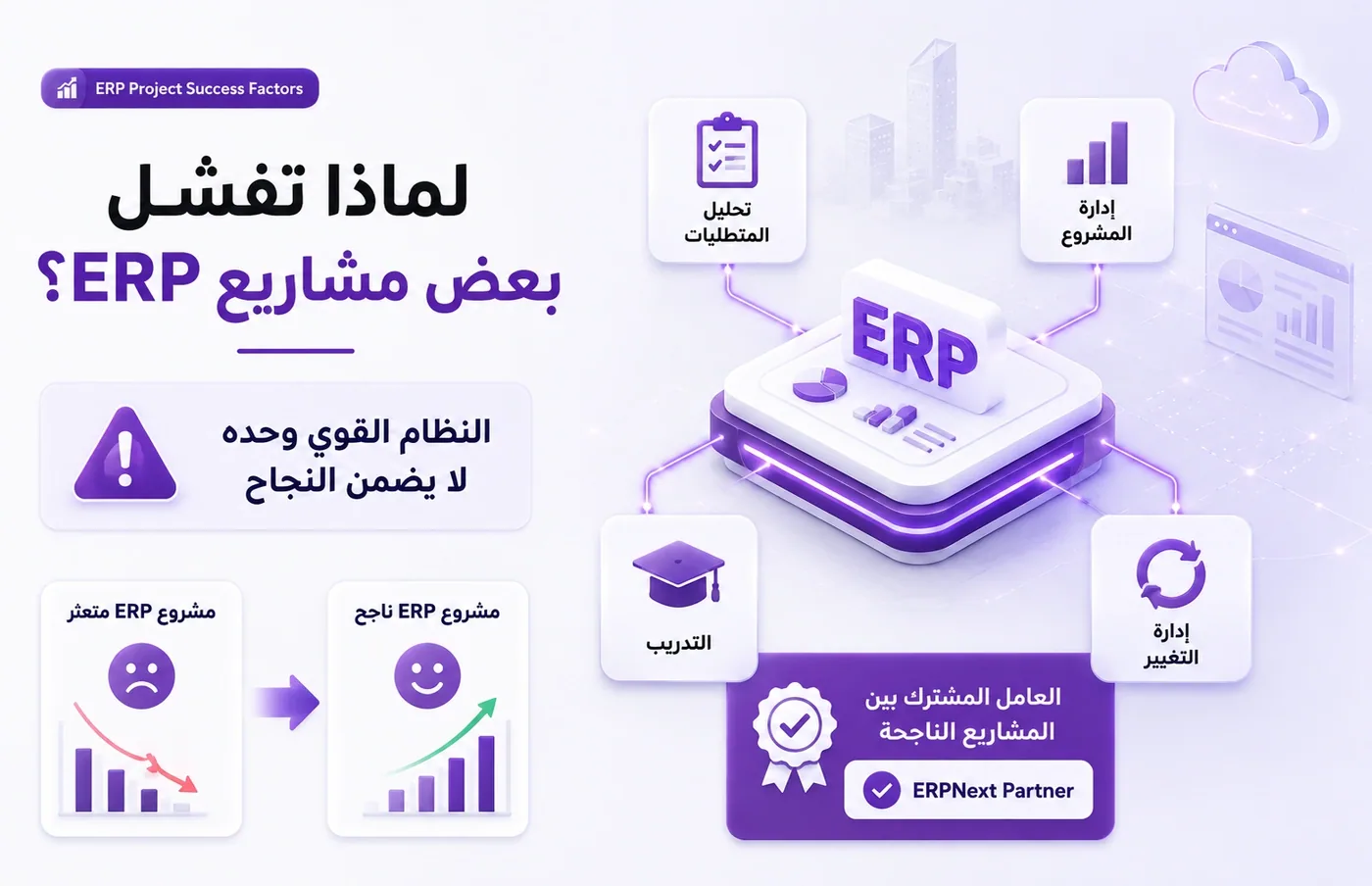
Why do some ERPNext projects succeed while others fail?
Many companies today have powerful, mature ERP systems that can run sales, purchasing, inventory, accounting, HR, and manufacturing on one platform. Yet a large share of ERP projects still struggle with implementation, run over budget, or fall behind schedule. In most cases the problem is not the system itself but how it is implemented and whether the right ERPNext partner is managing the project.
When companies talk about ERPNext project success, many focus on comparing technical features and functions across systems, while overlooking the factor with the biggest impact: the implementation team. Even the best ERP systems in the world can fail to deliver if they are implemented without a clear methodology or a real understanding of business needs and user requirements.
ERPNext project success begins at the stage of analyzing current processes, understanding operational challenges, and defining what the new system should achieve. After that come solution design, system configuration, data migration, training, change management, and go-live. Each of these stages calls for hands-on experience and deep knowledge of different business environments.
That is why choosing a certified ERPNext partner with real-world experience is one of the most important decisions a company makes before starting a digital transformation project. The right partner does more than set up the system. They act as an advisor who helps the organization get the most out of its ERPNext investment and turn the system into a real tool for growth and better performance.
A precise understanding of current processes and clear future goals is the starting point of any successful ERP project.
Planning, follow-up, and risk management are essential to protecting time, budget, and quality.
Data quality and accuracy are the foundation that reports and future decisions rely on.
The better users understand the system, the better the odds of project success and the expected return.
Why isn't choosing a powerful ERP system enough?
ERPNext offers a wide range of capabilities that help organizations run their operations efficiently, but successful adoption depends directly on how it is implemented. Companies are not just buying software. They are starting an operational and organizational transformation that needs experience, consulting, and ongoing change management.
What is the real role of an ERPNext Partner?
An ERPNext partner does more than set up the system. They help the organization analyze its needs, design the right solution, train users, manage change, and track performance after go-live, which greatly improves the odds of project success.
ERPNext success starts before the system is installed
Look at successful projects and you will find the common factor is not the system used but an ERPNext Consultant and an implementation team with experience, methodology, and a clear vision from day one. That is why choosing the right ERPNext Partner is one of the most important decisions affecting the success of the digital transformation project in your company.
ERPNext Partner ERPNext Consultant ERPNext Implementation ERP Project Success Digital Transformation ERP Consulting Services
ERPNext Partner vs ERPNext System
What is the difference between ERPNext and an ERPNext Partner?
Some companies believe that buying an ERPNext system is the only step needed to start a digital transformation project. In reality, the system is only the tool. Real success depends on an ERPNext Partner with the experience, methodology, and ability to lead the project from analysis all the way to go-live.
ERPNext
An integrated ERP platform that helps companies manage financial and operational processes in one unified system.
- Sales management
- Purchasing management
- Inventory management
- Accounting
- HR management
- Project management
- Manufacturing and supply chain
- Dashboards and reports
ERPNext Partner
A specialized team that helps companies turn ERPNext into a successful project that meets business goals and drives growth.
- Analysis of current processes
- Operational gap study
- Design of the right solutions
- System configuration
- Customization and development
- Data migration
- User training
- Ongoing support and improvement
The system is the tool... and the partner leads the journey
It is like buying a modern, advanced aircraft without a professional pilot to fly it. An organization may own the best ERP system on the market, but without experience, consulting, and a clear implementation methodology, results can fall well short of expectations.
Why do successful companies rely on ERPNext Consultants?
An ERPNext Consultant helps organizations reduce risk, speed up implementation, improve user adoption, and keep the project aligned with long-term business goals.
Meet Operion's certified team
The Operion team has broad experience delivering ERPNext projects across many industries. It includes certified ERP Consultants, business analysts, ERPNext developers, and project managers who help customers get the most out of the system.
ERPNext Implementation Success
Many companies today have powerful, mature ERP systems that can run sales, purchasing, inventory, accounting, HR, and manufacturing on one platform
Why is the implementation partner more important than the system itself?
ERPNext has powerful capabilities that help organizations run their operations efficiently, but those capabilities only deliver real value when applied by a team with the experience, methodology, and clear vision to lead the project and reach its goals.
The system is the aircraft... the partner is the pilot
Any company can buy an advanced ERP system, just as it can buy a modern aircraft with the latest technology. But owning the aircraft doesn't mean being able to take off or reach the destination. The same applies to ERP projects.
Project success depends on an ERPNext Consultant and an implementation team with the experience to analyze requirements, identify risks, manage change, and guide the organization through every stage of implementation.
Business analysis
Understand current processes and identify improvement opportunities before implementation begins.
Solution design
Configure ERPNext to match the organization's needs and goals.
Change management
Help users adopt the system and reduce resistance to change.
Training and support
Make operational teams ready and get the best value from the system.
An implementation partner does more than install the system
The real role of an ERPNext Partner starts before the system goes live and continues after Go-Live. They are responsible for turning the system from a technical program into a working platform that helps the company grow, improve efficiency, and make better data-driven decisions.
ERPNext Partner ERPNext Consultant ERP Implementation Digital Transformation Business Process Analysis ERP Success
When Do You Need An ERPNext Partner?
When do you need an ERPNext Partner?
Whether you are starting an ERP project for the first time or planning to upgrade your current system, an ERPNext Consultant helps you reduce risk, speed up implementation, and make sure the project delivers the results you need.
Not every ERP project is the same
Company needs differ by business size, the nature of operations, and the current stage of growth. But there are specific situations where having an ERPNext Partner becomes a real necessity for project success.
Implementing ERP for the first time
If your company relies on Excel or disconnected programs to run operations, an ERPNext Partner helps you build a strong foundation from the start.
Moving from another system
When migrating from SAP, Oracle, Odoo, or any other system, you need a clear plan for data migration and change management.
Expansion and growth
As the company adds branches, warehouses, or new production lines, the need for an experienced ERP Consultant grows.
Customizations and integrations
If you need integrations, custom development, or advanced reports, a specialized technical partner becomes essential.
Do you need an ERPNext Partner?
If your company fits one or more of the situations above, working with a professional ERPNext Partner will help you reduce risk, speed up implementation, and get the best return on your ERPNext investment.
Who is behind the success of ERPNext projects?
Choosing an ERPNext Partner is not only about the company that will implement the project. It is about the team that will work with you every day to understand your processes, analyze your needs, train your staff, and help you reach your operational and strategic goals.
Successful ERPNext projects require a mix of technical, managerial, and operational expertise. That is why successful organizations rely on integrated teams of business analysts, ERP consultants, project managers, developers, and technical support specialists working together for the best results.
A multidisciplinary team helps cover every stage of the project, from analyzing current processes and designing the right solutions, through system configuration, training, and data migration, to go-live and continuous improvement.
Each member of the implementation team plays a defined role that helps reduce risk, speed up delivery, improve the user experience, and make sure you get the most from ERPNext.
ERP Consultants
Lead the project from a business perspective and help the customer turn operational requirements into practical solutions inside ERPNext.
Business Analysts
Analyze current processes, identify gaps, and turn business needs into clear requirements.
ERPNext Developers
Build the customizations, integrations, and developments required, following best practices.
Project Managers
Manage timelines, tasks, risks, and communication between all parties to keep the project on track.
Support Engineers
Provide technical support and ongoing assistance after go-live to keep the system stable and improve performance.
The right team makes the difference
Two companies can have the same system and the same budget, yet get very different results depending on the team leading implementation. That is why the experience of the ERPNext Partner's team is one of the most important criteria to evaluate before deciding.
ERPNext Partner Selection Criteria
The real criteria for choosing an ERPNext Partner
Choosing an ERPNext Partner should not rest on price alone or on how many years a company has been in the market. You should evaluate a set of practical criteria that directly affect project success, implementation quality, and how quickly you see results.
How do you evaluate an ERPNext partner like a professional?
Before signing any contract or starting an ERPNext project, make sure the implementation partner has the experience, methodology, and team to manage the project from the start through go-live and ongoing support.
A certified, established team
Look for a partner with ERP Consultants and a team specialized in ERPNext who can offer real, practical consulting.
Experience in your industry
Every industry has different challenges, so it matters to choose a partner with experience in your own industry or line of business.
A clear implementation methodology
The partner should have a documented implementation plan covering analysis, design, implementation, training, and go-live.
A clear customer journey
A clear Customer Journey reflects the partner's maturity and ability to manage the project professionally.
Real case studies
A good partner can prove their success through real projects and measurable results.
Customization and development
Make sure the partner can deliver the integrations and customizations you need without affecting system stability.
Data migration
The ability to migrate historical data accurately is one of the biggest factors in ERPNext project success.
Training and change management
Project success depends not only on the system but on users' ability to adopt it and benefit from it.
Ongoing support
A professional support team helps solve problems and improve performance after go-live.
Long-term vision
Choose a partner who can support your future growth and expansion plans, not just deliver the current project.
Don't look for the cheapest... look for the best fit
The best ERPNext Partner is not necessarily the lowest-cost one. It is the partner with the experience, methodology, and team to turn ERPNext into a real investment that delivers long-term value to the organization.
ERPNext Partner ERPNext Consultant ERPNext Implementation ERP Services ERP Consulting Digital Transformation
ERPNext Implementation Methodology
An ERPNext implementation methodology, step by step
ERPNext project success depends not only on the system or the team but also on a clear implementation methodology that helps manage the project, reduce risk, and ensure a smooth move from the current state to the new working environment.
Why does the implementation methodology matter?
Successful projects don't rely on individual improvisation. They rely on a clear work plan covering every stage, from studying the current situation to go-live and ongoing support. That is why Operion follows an organized ERPNext implementation methodology that makes roles, responsibilities, and expectations clear throughout the project.
Discovery
Understand the company, the project goals, and current challenges, and identify stakeholders.
Business Analysis
Analyze current processes, document requirements, and study operational gaps.
Solution Design
Design the right solution and define how ERPNext will be used to meet business goals.
Configuration
Configure the system and set up the organizational structure, accounts, and master data.
Development
Build the customizations, integrations, and developments needed, where required.
Data Migration
Move data from previous systems while verifying quality and accuracy.
Testing
Test processes and confirm the system is ready before go-live.
Training
Train users and departments to use the system efficiently.
Go Live
Officially launch the system and monitor operations during the first phase.
Continuous Support
Ongoing support and improvement to deliver the best results over the long term.
A clear methodology = better results
Every stage of an ERPNext implementation directly affects project success. That is why a clear methodology helps reduce risk, improve implementation quality, and reach the desired results faster.
The customer journey with ERPNext
ERPNext project success doesn't begin when the system goes live. It begins at the first meeting to understand business needs and ends with continuous improvement and sustainable growth. That is why successful projects rely on a clear journey that carries the organization confidently through every stage of digital transformation.
Discovery Session
Understand company goals and current challenges and define the future vision for the project.
Analyze current processes and document operational and management needs.
Gap Analysis
Compare the current state with ERPNext capabilities and identify the gaps to close.
Design the right solution and define the implementation scope and required customizations.
Set up the system and prepare master data and the organizational structure.
Customization
Build the customizations and developments needed to meet business goals.
Move data from previous systems with a review of quality and accuracy.
Testing & UAT
Test the system and confirm all processes are ready before launch.
Train users and departments on the system.
Launch the system and monitor live operations during the first phase.
Hyper Care
Intensive support and handling of feedback right after launch.
Continuous Improvement
Ongoing development, performance improvement, and support for future growth.
A clear journey that leads to measurable results
Every stage of the Customer Journey is an important step toward project success. The clearer and more organized the journey, the better the odds of meeting the organization's goals, reducing risk, and speeding up return on investment.
How do you evaluate an ERPNext Partner's experience?
Any company can talk about its experience or show a long list of services, but the real test of an ERPNext Partner is the ability to prove results through real projects delivered successfully across different industries.
Results matter more than promises
When choosing an ERPNext partner, look for real examples of projects already delivered. Understand the challenges customers faced, how they were handled, and what results were achieved after the system went live.
Successful case studies help you assess the partner's technical and consulting expertise, and give you a clear picture of how well they handle work environments similar to your business.
Project size
Has the partner delivered similar projects in terms of user count, number of branches, and process complexity?
Operational challenges
What problems did the customer face before ERPNext, and how did the project help solve them?
The proposed solution
How was the solution designed within ERPNext, and which modules or customizations were used?
Actual results
Did operational efficiency improve? Did errors drop? Did reports become more accurate?
Scalability
Was the system designed to handle future growth and business expansion?
User satisfaction
Were employees able to adopt the system and benefit from it after go-live?
The best proof of expertise is a successful project
Each case study is a real experience showing how ERPNext goes from a technical system to a practical tool that supports growth, improves performance, and helps companies make better data-driven decisions.
Manufacturing
Construction
How does ERPNext help different industries grow?
No two companies are exactly alike, so operational challenges differ from one industry to another. Even so, ERPNext has helped thousands of organizations worldwide improve performance and operational efficiency with flexible solutions that adapt to different industries.
Manufacturing
Production management, planning, raw materials, supply chains, and cost control on one platform help factories improve efficiency and cut waste.
- Production Planning
- BOM Management
- Work Orders
- Cost Control
Distribution
Better management of inventory, purchasing, sales, and warehouses to keep products available and lower operating costs.
- Inventory Management
- Warehouse Control
- Procurement
- Order Fulfillment
Services
Manage projects, contracts, HR, invoicing, and operational follow-up from a single system.
- Project Management
- Service Contracts
- Resource Planning
- Billing Automation
Contracting
Manage projects, budgets, progress certificates, operating costs, and execution tracking across different job sites.
- Project Costing
- Contracts Management
- Site Operations
- Budget Tracking
Every industry has a different success story
Real case studies help you understand how ERPNext is applied in different work environments, and how companies improved operational efficiency, raised data quality, and sped up decision-making after adopting the system.
ERPNext Partner Evaluation Checklist
15 questions to ask before choosing an ERPNext Partner
Choosing an ERPNext partner is a strategic decision that can affect the success of your digital transformation project for years. So don't just compare prices or commercial offers. Use these questions to evaluate the partner's experience and their ability to deliver your project successfully.
How do you use this checklist?
Ask these questions in your first meetings with any ERPNext Consultant or ERP Implementation Partner. Every clear answer backed by real examples will help you make a more accurate and confident decision.
Are you a certified ERPNext partner?
How many ERPNext projects have you delivered?
Do you have experience in our industry?
What implementation methodology do you follow?
How do you analyze requirements and study gaps?
How do you handle data migration?
How are users trained?
What is the change management plan for the project?
Can you show similar case studies?
How do you handle the customizations we need?
How is the system tested before Go Live?
What level of technical support do you provide after go-live?
How is project success measured?
What are the potential risks and how are they managed?
Why should we choose you as our ERPNext partner?
Every question reveals an important side of their experience
A professional partner doesn't settle for general answers. They give real examples, a clear methodology, and case studies that prove they can deliver ERPNext projects successfully. The clearer and more detailed the answers, the more confidence you can have in your decision.
Why choose Operion as your ERPNext partner?
Choosing an ERPNext Partner is not only about implementing the system. It is about choosing a team that helps you reach business goals, reduce risk, and speed up your digital transformation journey. That is why Operion combines hands-on experience, a clear methodology, a certified team, and real-world case studies in an integrated framework focused on customer success.
Certified Team
A specialized team of ERP Consultants, business analysts, project managers, and ERPNext developers working together to make the project succeed.
Customer Journey
A clear customer journey that runs from the Discovery Session to continuous improvement after go-live.
Implementation Methodology
An organized implementation methodology covering analysis, design, implementation, training, go-live, and ongoing support.
Case Studies
Real results and success stories showing how ERPNext helped organizations improve performance and grow.
Implementation A clear methodology
An implementation partner... not just a service provider
At Operion, we believe ERPNext project success is not measured by the number of screens configured or hours delivered, but by the system's ability to improve operations, give management better visibility, and support the organization's future growth. That is why we focus on building long-term partnerships that help our customers achieve real, lasting results.
ERPNext Frequently Asked Questions
Frequently asked questions about ERPNext Partners
Before choosing an ERPNext Partner or starting an ERPNext implementation project, companies ask many questions about cost, methodology, timeline, and technical support. Here are some of the most common questions to help you make a better decision.
An ERPNext Partner is a company or specialized team that helps organizations analyze their needs, implement ERPNext, train users, manage change, and provide ongoing support to make the project succeed.
You should evaluate the partner's experience with past ERPNext projects, whether they have a certified team, a clear implementation methodology, real case studies, and the quality of their technical support and training.
Implementation time depends on the size of the organization, the number of users, and the complexity of the processes involved. Some projects take a few weeks, while larger ones need several months.
Yes. Data can be migrated from existing systems or Excel files into ERPNext through an organized Data Migration plan that ensures data quality and accuracy.
Yes. ERPNext suits small, medium, and large companies thanks to its flexibility and its ability to scale as the business grows.
ERPNext supports customizations, development, and integration with external systems such as online stores, payment systems, and various applications.
Yes. Operion provides user training and ongoing technical support, along with development and consulting services, to help you get the best value from ERPNext.
You can contact the Operion team to book a free discovery session to understand your company's needs and discuss the best way to implement ERPNext to fit your business goals.